Tag: online

  • Typeshift

    Typeshift Introduction/History

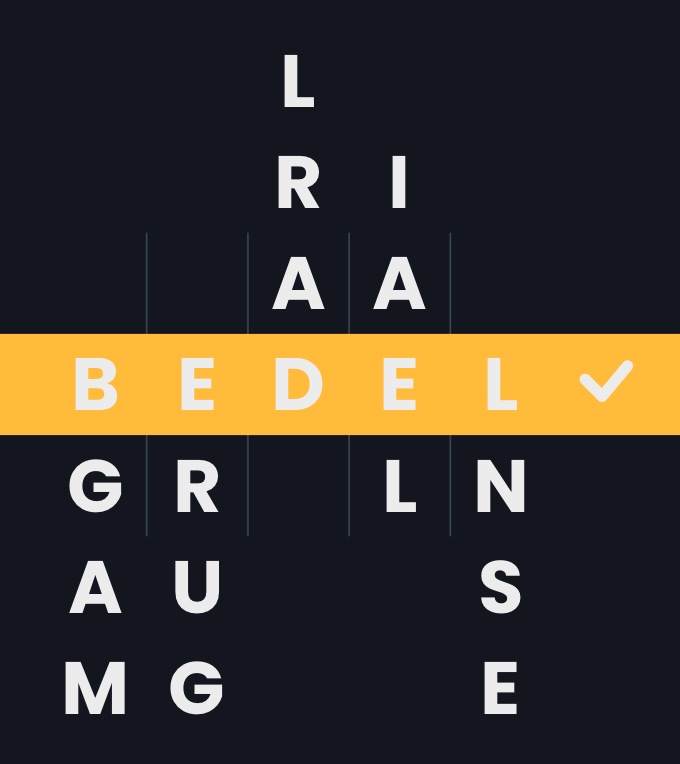
    Typeshift is a daily online word puzzle that blends anagram solving with vertical column shifting to create horizontal words. Originally released in 2017 by Zach Gage and later integrated into the Puzzmo platform, the game has become popular for its satisfying mechanics where players slide letter columns up and down to spell words.

    Unlike many word games that ask you to guess or rearrange letters within a single word, Typeshift challenges you to use all available letters vertically and horizontally, turning every letter “solid” by incorporating it into at least one valid word.

    Rules of Typeshift

    Typeshift presents a set of vertical columns of letters that you can slide up or down to form valid words. Key mechanics include:

    • Slide Columns: Move each column of letters up or down so that horizontal words form in the highlighted row.
    • Turn Letters Solid: When a word you form uses a letter, that letter becomes “solid” (often shown by a visual change in the game). Your goal is to turn every letter solid by finding valid words that include each letter at least once.
    • Core vs Additional Words: Some puzzles provide core words that guarantee a solution, but you’re free to find any valid words — even uncommon ones — to make progress.
    • Scoring: You earn points for each solid letter. Points for solid letters decrease over time, so finding words earlier rather than later usually yields a higher score.
    • Keyboard Controls: You can play with your keyboard by typing; arrows or typing will move selections and help you construct words quickly.

    The puzzle is complete once all letters have been turned solid at least once during play.

    Typeshift Strategy

    Turn Solid Letters Early

    Start by forming words that include as many different letters as possible. Turning letters solid early boosts your score and reveals more options.

    Use Core Words Wisely

    Core words are usually common words that are guaranteed to exist in the puzzle. Finding these early can make solving the rest easier.

    Slide Efficiently

    Since all words are formed by sliding entire columns, plan moves to bring multiple potential letters into alignment at once.

    Try Unusual Words

    If you get stuck, don’t hesitate to try less common words — Typeshift allows any valid words, and these can help you turn stubborn letters solid.
    Typeshift Website

  • Victordle

    Victordle Introduction/History

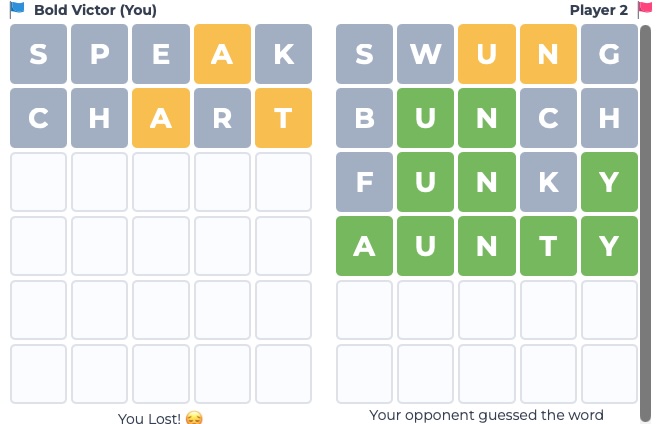
    Victordle is an online competitive word-guessing game where two players race to uncover a hidden five-letter wordbefore their opponent. It builds on the familiar Wordle format — guessing a word in six tries with color-coded feedback — and adds a head-to-head element that turns vocabulary skill into a fast-paced duel.

    The game offers both casual competition and more intense play, allowing you to challenge strangers online or invite a friend. This blend of strategy, speed, and direct competition gives Victordle a distinct feel from solo daily puzzles.

    Rules of Victordle

    Victordle tasks players with guessing a secret five-letter word using standard Wordle-style mechanics, but with a competitive twist. Key rules include:

    • Word Length: Every guess must be a real five-letter English word.
    • Guess Limit: You have six guesses total to find the hidden word.
    • Color Feedback: After each guess, tiles change color to show how close you are:
      • Green = letter is in the correct position.
      • Yellow = letter is in the word but in the wrong position.
      • Gray = letter is not in the word at all.

    Victordle offers two main competitive modes:

    • Turn-by-Turn Mode: Players alternate guesses, with up to 30 seconds per turn. The first player to correctly guess the word wins.
    • Duel Mode: Both players guess simultaneously on parallel boards — you must solve the word within six tries faster than your opponent.

    Victordle Strategy

    Start with Common Words

    Begin with guesses that include frequent vowels and consonants. This gives more information about which letters might be correct early on.

    Maximize Feedback

    Use the color feedback to eliminate impossible letters and narrow down possibilities quickly. Each green or yellow clue should guide your next guess more precisely.

    Balance Speed and Accuracy

    In Duel Mode especially, solving quickly matters. But don’t rush guesses if it sacrifices information — a smart guess can reveal more clues than a risky one.

    Watch Your Opponent (When Visible)

    Some versions allow you to see your opponent’s progress. Use that information to adjust your strategy — for example, being more cautious if they’re getting close.

    Manage Time in Turn-by-Turn

    In Turn-by-Turn Mode, you often have a 30-second limit per guess. Think ahead while waiting for your turn so you’re ready to enter your word quickly.

    Victordle Website

  • Waffle

    Waffle Introduction

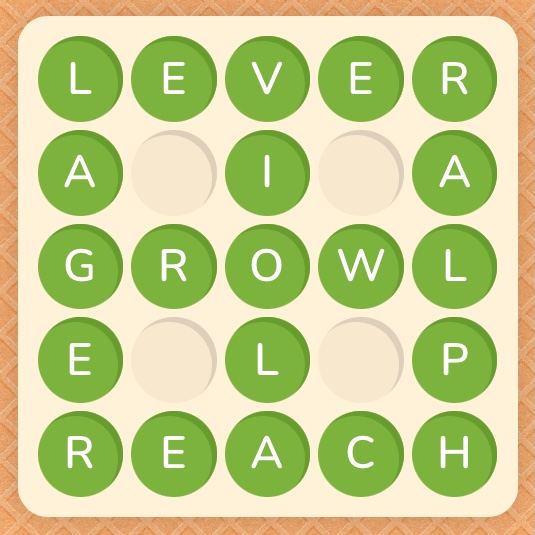
    Waffle is a daily online word puzzle that mixes elements of Wordle with crossword-style solving. Instead of guessing a hidden word one letter at a time, you’re given a fully populated grid of letters that you must rearrange to spell a set of valid words within a limited number of moves.

    The standard daily puzzle is a 5×5 grid, but Waffle also offers 3×3 and 7×7 grids for different challenges: 3×3 requires forming four 3-letter words in seven moves, while 7×7 requires forming eight 7-letter words in 25 moves. The game has become popular for its clever use of color feedback and strategic letter swapping, appealing to both casual players and word puzzle enthusiasts.

    Rules of Waffle

    Waffle presents a grid with letters already placed, though often in the wrong positions. Your objective is to turn all letters green by forming the correct words. Key mechanics include:

    • Swap Letters: Drag or click to swap any two letters on the grid.
    • Colour Feedback: Letters change color after each move to show how close they are to the correct placement:
      • Green = letter in the correct position
      • Yellow = letter in the word but wrong position
      • Gray = letter not in that word line
    • Move Limits:
      • 3×3 grid → 7 moves to form four three-letter words
      • 5×5 grid → 15 moves to form six five-letter words
      • 7×7 grid → 25 moves to form eight seven-letter words
    • Daily & Unlimited Modes: Standard daily puzzles update every day, and unlimited mode lets you play extra grids without waiting.

    Waffle Strategy

    Lock in Correct Letters First

    Focus on green letters as a foundation — they’re already correct and won’t need to be moved.

    Use Feedback Effectively

    Yellow and gray letters provide vital clues about placement. Plan swaps to reduce uncertainty and maximize letter positioning.

    Optimize Swaps Across Words

    Every letter affects both horizontal and vertical words, so prioritize swaps that improve multiple words simultaneously.

    Manage Moves Carefully

    Work efficiently because you have a limited number of swaps. Solving multiple letters with a single move will conserve moves and improve your performance.

    Waffle website

  • Twofer Goofer

    Twofer Goofer Introduction/History

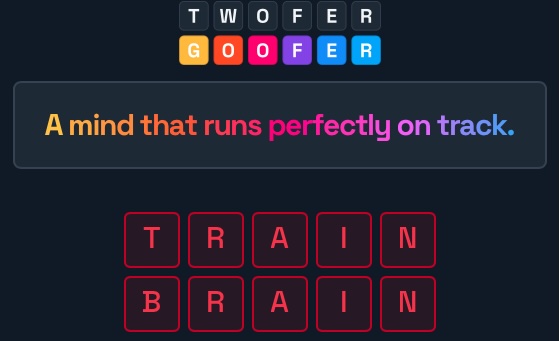
    Twofer Goofer is a daily online word game from Merriam-Webster that challenges players to create rhyming pairs. Each puzzle presents a phrase rather than a single word, making the game both a vocabulary and lateral-thinking challenge. Success often comes from being willing to think a little bizarrely and creatively.

    The game encourages playful thinking by combining language skill with fun problem-solving. Players must find two words that rhyme to complete the phrase, often producing unexpected and amusing combinations.

    Rules of Twofer Goofer

    Players are given a target phrase for each puzzle. Key mechanics include:

    • Create Rhymes: Come up with two words that rhyme to complete the phrase.
    • Use Clues: Each puzzle provides helpful hints:
      • Number of syllables in each word
      • First letters of the two words
      • A blurred image depicting the answer
    • Daily Challenge: A new phrase is provided each day. Players can also attempt multiple puzzles per day, though the exact limit is not specified, and puzzles may vary.

    The goal is to find a rhyming pair that fits the phrase and matches the clues. Creativity and vocabulary knowledge are both important to succeed.

    Twofer Goofer Strategy

    Think Broadly

    Consider all possible rhymes, including unusual or less common words. Lateral thinking is often required to match the clue’s intended answer.

    Use Word Patterns

    Pay attention to the syllables and first letters provided. These clues narrow possibilities and help identify correct rhymes.

    Use the Image Clue

    The blurred image is a key hint. Interpreting the visual correctly often reveals the intended phrase.

    Test Multiple Options

    Don’t settle on the first pair you think of. Experimenting with a few combinations can help you find the best match.

    Twofer Goofer website

  • The Missing Letter

    Screenshot

    The Missing Letter Introduction/History

    The Missing Letter is a daily online crossword puzzle from Merriam-Webster, written by celebrated crossword creator Matt Gaffney.

    Each clue is a dictionary definition, and each answer begins with a different letter of the alphabet. At the end of the puzzle, the one letter not used is the “missing letter,” and players can collect these daily letters throughout the week to unscramble a weekly Mystery Word.

    The game combines traditional crossword solving with an alphabetic twist, offering a fresh challenge for crossword enthusiasts and vocabulary lovers.

    Rules of The Missing Letter

    Players are presented with a set of clues, each with a dictionary definition. Key mechanics include:

    • Answer Each Clue: Every answer must start with a different letter of the alphabet.
    • Identify the Missing Letter: After filling in all answers, the letter not used is the “missing letter” for that day.
    • Weekly Mystery Word: Collect the daily missing letters to unscramble a weekly word for an added challenge.

    The game is updated daily, giving players a new puzzle each day, and emphasizes vocabulary knowledge and deduction skills.

    The Missing Letter Strategy

    Work Alphabetically

    Use the constraint that each answer begins with a different letter to narrow possibilities, especially for letters with fewer common words.

    Leverage Dictionary Knowledge

    Because all clues are dictionary definitions, having a broad vocabulary and familiarity with Merriam-Webster’s Collegiate Dictionary helps.

    Solve Easy Clues First

    Filling in the easiest clues first gives you context for trickier answers, and helps narrow down which letters might be missing.

    Track Missing Letters

    As you fill in the puzzle, note which letters have been used — this makes identifying the missing letter quicker at the end.

    Missing Letter website

  • Pilfer

    Pilfer Introduction

    Pilfer is an online word game from Merriam-Webster that combines vocabulary knowledge with a competitive twist.

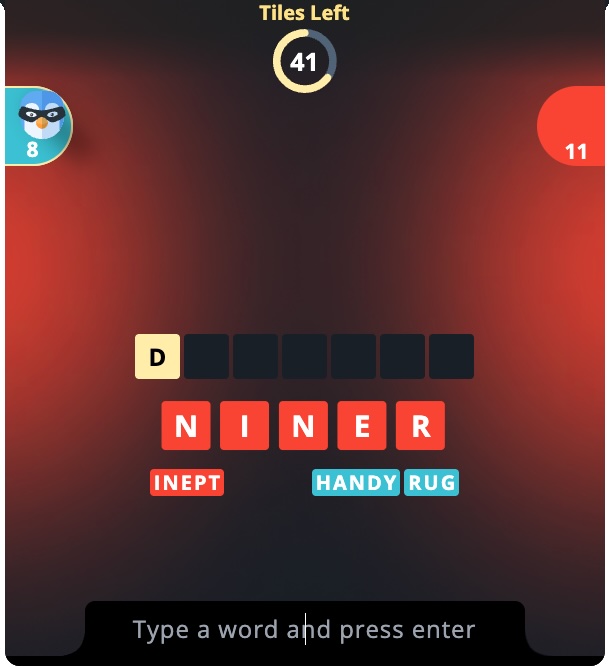
    Players form words from a shared pool of 60 letter tiles and can strategically “steal” points from opponents.

    Matches usually involve anonymous players, but you can also share a link to play with friends. In anonymous games, you won’t know in advance if you’ll be competing against 1, 2, or 3 opponents, which can make games with four players much more frenetic than games with only two.

    It’s also possible to play against a computer opponent.

    While it doesn’t have a classic predecessor like Scrabble or Boggle, Pilfer fits into the family of modern online multiplayer word games that reward both word skill and tactical thinking.

    Rules of Pilfer

    In Pilfer, all players play simultaneously in real time, creating words from the communal tile pool. Key mechanics include:

    • Form Words: Each word you create scores points equal to its length.
    • Steal Points: If another player has already played a word you can extend or “steal,” you gain points while your opponent loses the same number of points.
    • Time Pressure: The game moves quickly because all players are active at the same time.

    The game ends when all 60 tiles have been played. Because points are transferred during steals, the total combined score of all players never exceeds 60. The winner is the player with the highest score at the end.

    Pilfer Strategy

    Focus on Longer Words

    Longer words score more points and give you more opportunities to steal, so aim to maximize word length whenever possible.

    Watch Opponents’ Words

    Keep an eye on words already played. Identifying steal opportunities can swing points in your favor.

    Prioritize Speed and Accuracy

    Because Pilfer is real-time, typing quickly and accurately is critical. Slow input can cause missed steals and lost points, especially in games with multiple opponents.

    React, Don’t Track Letters

    Unlike Scrabble or Boggle, the tile pool is randomized each game, and harder levels tend to use less common letters. Tracking remaining tiles isn’t possible; focus instead on creating the best words possible with what’s available.

    Adjust Strategy for Player Count

    Games with more opponents are faster and more competitive. In four-player matches, you may need to act more aggressively and watch the board closely, while two-player games allow for a slightly more measured approach.

    Pilfer website

  • Revealed

    Revealed Introduction/History

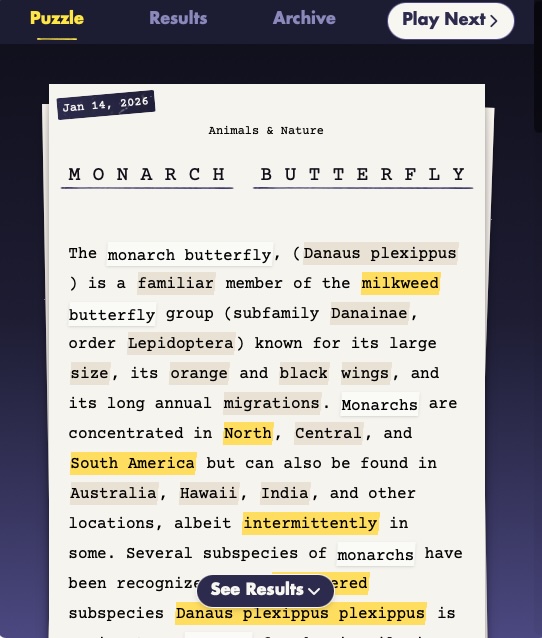
    Revealed is an online daily puzzle hosted by Britannica that combines word-solving with general knowledge challenges. Players are presented with a grid or puzzle layout where letters are hidden, and the goal is to uncover words or names related to history, culture, or other factual topics. While not a direct adaptation of a classic word game, Revealed fits into the growing genre of educational word puzzles, merging vocabulary skills with trivia knowledge.


    Rules of Revealed

    In Revealed, each puzzle presents a partially hidden word, phrase, or name. Players must:

    • Guess letters or words to gradually reveal the correct answer
    • Use context clues from hints or associated facts
    • Complete the puzzle to unlock the full word or phrase

    The game is designed as a daily challenge, so players get a fresh puzzle each day. Scoring is usually based on how efficiently the puzzle is solved, but the emphasis is on discovery and learning rather than competition.


    Revealed Strategy

    Because Revealed combines vocabulary with trivia, strategy focuses on both knowledge and deduction:

    Start with Obvious Letters

    Common vowels or consonants often appear in hidden words and can help uncover other letters.

    Use Context Clues

    Hints provided relate to history, literature, or general knowledge, which can narrow down possible answers.

    Consider Word Structure

    Identifying letter positions, familiar prefixes, or suffixes can help even if the full word is unknown.

    Learn from Each Puzzle

    Daily play builds familiarity with common topics and letter patterns, improving speed and accuracy over time.

    Revealed website

  • Reunion

    Reunion Introduction

    Merriam-Webster’s Reunion is a free online word puzzle hosted on the Merriam-Webster website. Unlike classic word-search or crossword games, Reunion challenges players to rearrange letter tiles on a grid to form valid words in both rows and columns, earning stars by solving with as few moves as possible. While it doesn’t have a long historical lineage like Scrabble or Boggle, it fits into the modern family of daily word-puzzle games that test vocabulary and spatial reasoning. 

    Rules of Reunion

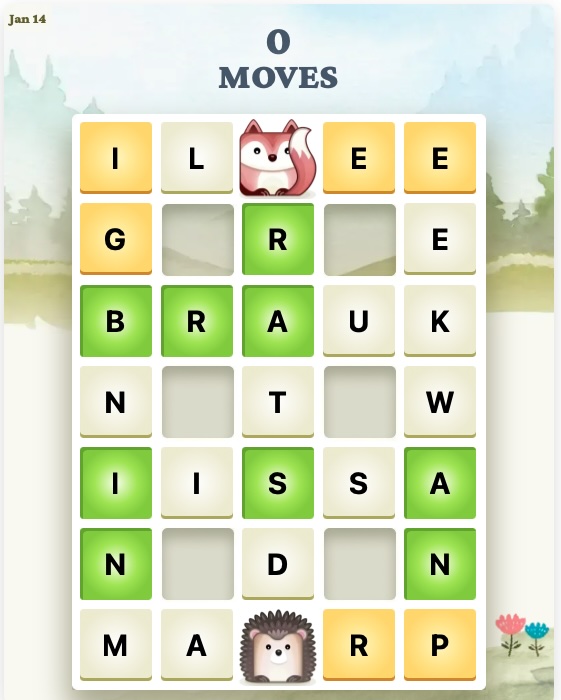
    Reunion presents a grid filled with scrambled letter tiles and two special animal tiles (a fox and a hedgehog). Your goal is to drag and reposition tiles so that every row and column forms valid words and every letter tile ends up in its correct spot, at which point the tile turns green. 

    Here’s what you need to know:

    • Form Words: Create complete, continuous valid words in horizontal and vertical lines. 
    • Tile Colors: Green means the letter is in the correct location; white and yellow indicate a tile still needs adjustment to fit somewhere in that row or column. 
    • Animals as Markers: The fox and hedgehog split rows or columns — meaning some may contain two separate words. Completing the puzzle eventually reunites them on the board. 
    • Scoring: Fewer moves earn higher ratings (up to three stars typically for solving in under ~20 moves). 

    Reunion updates daily with a new puzzle, giving players a fresh challenge every day.

    Reunion Strategy

    Reunion isn’t just about knowing lots of words — it’s about placement and planning:

    Start with Certainties

    Move the letters you recognize first to spots where they must belong based on current feedback (especially green tiles). This reduces ambiguity early.

    Use Color Hints Wisely

    Yellow and white feedback gives valuable clues: yellow means the letter does belong in that row/column somewhere, so focus on shifting it toward potential correct spots.

    Look for Grid Patterns

    Scan for common letter clusters or endings (like -ING or -TER) that might anchor words, then build around those.

    Think Two Moves Ahead

    Avoid unnecessary back-and-forth on the same tiles — instead, plan sequences of moves that correct multiple problem areas.

    Practice Regularly

    Because Reunion’s puzzles shift daily, consistent play helps you recognise repeat patterns and common letter groupings faster.

    Reunion website

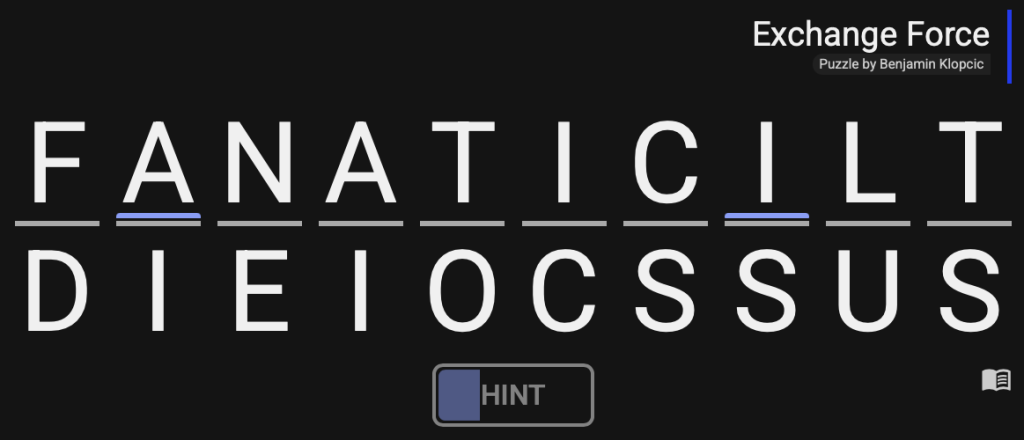
  • Couplit

    Couplit is an anagram-solving puzzle game in which a two word phrase or pair is shuffled over two lines. Each pair of top and bottom letters is tied together but they can be swapped vertically with one another, or moved horizontally to swap with another pair of letters.

    During the swapping process, smaller lowers may be formed. These are automatically recognised and work towards hints which show the user which letters are correct and which need to be moved.

    The main game has no time or move limits.

    Couplit Rules

    The rules of Couplit are simple — you can move any pair of letters left and right to swap with another pair of letters, or you can click/tap on them to swap them (top to bottom).

    Every time a move is made, any words formed are automatically logged and the hint counter is increased. Every time a hint is available it can be used to show a pair of letters which are either in the correct place or need to be moved.

    The little dictionary icon can be tapped/clicked to see which words have been discovered during play.

    Couplit website

  • Octordle

    Octordle is a Wordle spinoff game in which players must try to guess eight words at once.

    It is hosted by Britannica.

    The rules are very much the same as for Wordle.

    Octordle Rules

    • The player has a certain number of guesses to determine the eight hidden words. The number of guesses depends on which Quordle game is being played.
    • After each guess, letters are highlighted in different colours on each of the eight grids:
      • Green: The letter is in the correct position.
      • Yellow: The letter is in the word but in the wrong position.
      • Grey: The letter is not in the word at all.
    • Words with duplicated letters are allowed.
    • Simple plurals are valid word guesses but will never be a solution.
    • If a player guesses a word containing just one letter which is repeated in the solution word, Octordle will not show that letter as being repeated.
    • However, if a player guesses a word with a repeated letter, but the solution word only has one of that letter, Octordle will highlight just one of the letters in the appropriate colour.

    Octordle Variants

    Octordle Game Modes

    Octordle has three daily games, all of which can be played for free. They are simply variants of each other and determine how many guesses are available. The solution words are different for each puzzle, so all can be played each day:

    1. Classic: The original daily Octordle with 13 guesses.
    2. Chill: Relax with 16 guesses and fewer unusual words.
    3. Extreme: Challenge yourself with only 12 guesses and more unusual words.

    Octordle Sequence Game

    Sequence is similar to the original Octordle game with the following changes.

    1. Only one unsolved word is visible at a time. Once you solve a word, the next board is unlocked.
    2. 13 guesses are allowed.

    Octordle Rescue Game

    The puzzle begins with starter words already in place. The other rules remain the same.

    Octordle website